How to Choose the Right Laser Tube for Your Needs?
Choosing the right laser tube is crucial for optimal results. A laser tube affects your projects more than you might realize. Whether for engraving or cutting, the right type needs careful consideration.
Different materials require specific laser tubes. For example, CO2 laser tubes are great for non-metal materials like wood and acrylic. On the other hand, fiber laser tubes excel with metals. It’s essential to match the laser tube to your intended use.
Consider the power, lifespan, and compatibility. High-powered tubes are tempting, but they may not suit every application. Not all tubes fit all machines, leading to costly mistakes. Research is key to making an informed choice. Take time to evaluate your needs and the available options in the market.
Understanding the Types of Laser Tubes Available in the Market
When selecting a laser tube, understanding the types on the market is crucial. Common options include CO2, fiber, and solid-state laser tubes. CO2 lasers are versatile and popular for cutting and engraving non-metal materials. They work best on wood, acrylic, and glass, making them suitable for various applications.
Fiber laser tubes, on the other hand, shine when working with metals. They can cut stainless steel, aluminum, and brass with precision. This type of laser is gaining traction in industrial settings. Solid-state tubes, while less common, offer benefits in specific applications. They are often used in scientific and medical fields due to their reliability and power.
It’s essential to reflect on your needs. Consider the materials you'll work with and the complexity of your projects. Not every tube fits every purpose. If you choose a laser tube purely based on popularity, you might find it doesn't accommodate your specific requirements. Understanding the unique traits of each type will guide you in making an informed decision.
How to Choose the Right Laser Tube for Your Needs?
| Type of Laser Tube |
Wattage |
Typical Use |
Lifespan (hours) |
Cost ($) |
| CO2 Laser Tube |
40 - 150W |
Engraving, Cutting Wood, Acrylic |
2000 - 3000 |
300 - 700 |
| Fiber Laser Tube |
20 - 1000W |
Metal Engraving, Cutting |
25000 - 50000 |
2000 - 10000 |
| Diode Laser Tube |
1 - 5W |
Low-Power Engraving, PCB |
10000 - 20000 |
50 - 300 |
| YAG Laser Tube |
30 - 150W |
Matrix Engraving, Marking |
10000 - 30000 |
500 - 3000 |
Key Factors to Consider When Choosing a Laser Tube
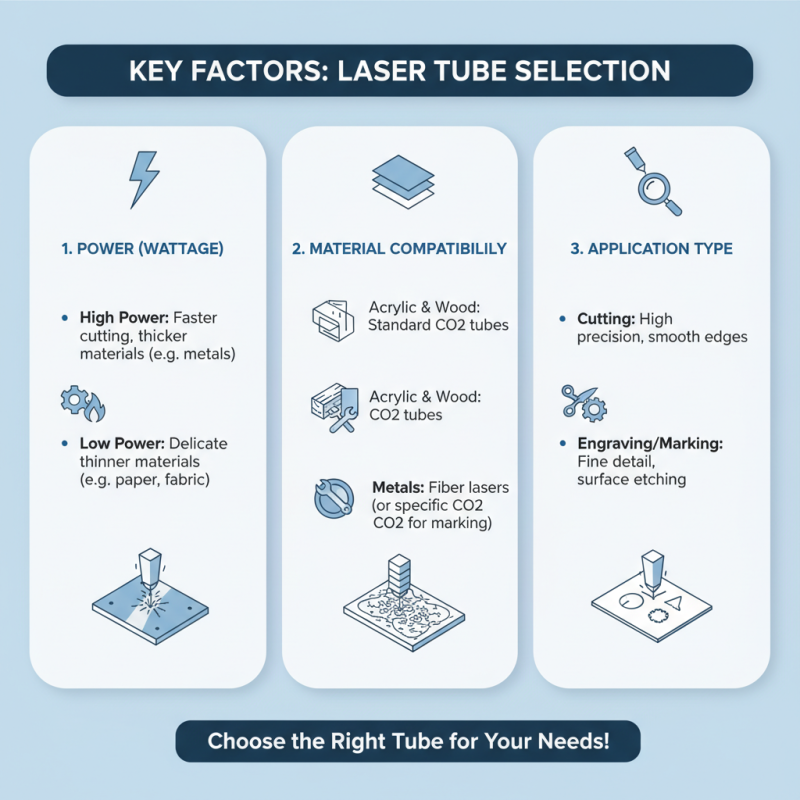
When choosing the right laser tube, several key factors play a crucial role. Power is one of these factors. High-power tubes enable faster cutting and engraving, making them ideal for thicker materials. However, lower wattage might suffice for delicate designs. Evaluating the materials you plan to work with is essential. For instance, acrylic and wood have different demands compared to metals.
Another vital consideration is the tube length. A longer tube typically means a longer lifespan and more consistent performance. Shorter tubes may be cheaper, but they can also require more frequent replacements. Cooling systems also matter. A reliable cooling method is crucial to maintain optimal performance and prevent overheating. An overlooked aspect is the maintenance requirements. Some tubes are easier to service, while others may be more complex.
Don't forget about compatibility with existing equipment. Ensure the tube fits well with your current setup. It’s easy to assume that all tubes will work seamlessly together, but that’s not always the case. Your choice can significantly impact your productivity and quality. Reflecting on these considerations can help you make a more informed decision. Take the time to evaluate all aspects before making a final choice.
Assessing Power Requirements for Your Specific Application
Choosing the right laser tube is crucial for efficiency in your projects. Power requirements significantly impact performance. Assessing these needs involves understanding material types, thicknesses, and desired cutting or engraving speeds. For example, thicker materials require more power to achieve clean cuts.
When selecting a laser tube, consider the wattage. Common choices range from 40W to 120W. A 40W tube may suffice for thin wood or acrylic, while thicker materials demand higher wattage. Not determining the right power can lead to frustrations during the process.
Tips: Always verify the material specifications. Test with different settings on scrap materials. This helps you find the optimal power level. Document your results for future reference. A methodical approach will save time and reduce errors. Regularly reevaluate your power needs as your projects evolve.
Evaluating Compatibility with Your Existing Equipment
Choosing the right laser tube means evaluating its compatibility with your existing equipment. It's vital to know the specifications of your current setup. For instance, the wattage of your laser system dictates the tube you need. A mismatch may lead to insufficient power or system failures.
Industry reports show that over 70% of users experience inefficiency when using incompatible tubes. This suggests that many mistakes are made in the selection process. Always check the mounting dimensions and connector types as well. These specifications directly influence performance and usability.
Tip: Look for detailed product specifications online. This helps avoid common errors when purchasing.
Incompatibility can also lead to costly downtime. A laser tube that doesn't fit can waste materials and hinder production. Be prepared to consult with experts if needed. They can provide insights that might not be immediately obvious.
Tip: Take notes during consultations. This helps keep track of essential information for future reference.
Cost Considerations and Budgeting for Laser Tube Purchase
When purchasing a laser tube, cost is a significant factor. According to a recent industry report, the average price range for laser tubes is between $100 and $1,500, depending on the type and quality. Beginners may find lower-cost options sufficient for basic projects. However, professional applications often require higher-quality tubes, which can increase budgets significantly. It's crucial to clearly define your needs before making a decision.
Keep in mind that operating expenses add to the initial purchase cost. Consider factors like power consumption and maintenance. For example, a lower-cost tube may consume more power over time, leading to higher electricity bills. Investing in a more efficient tube can save money in the long run, despite a higher upfront cost.
Tips: Always account for potential upgrades. Future requirements may demand a more powerful laser. Research affordable options and consider financing plans if needed. Look into warranties, as these can indicate product reliability. Aim for a balance between cost and performance to ensure the best investment for your endeavors.
Cost Considerations for Laser Tube Purchase